
It is a truism to say that we are living in an age of technology. Our lives are immersed in technology to such an extent that this obvious fact has become obscured. Our everyday existence is saturated in technological artifacts. Our day starts with an alarm clock, and throughout a typical day, we deal with a plethora of different machines such as a microwave, car, phone, computer, etc. Nowadays, some gadgets even track our bodily functions when we are sleeping. We constantly quantify ourselves by counting our steps, monitoring our heart rate, calories, blood glucose level and much more. Our entertainment takes place through some form of technology, be it TV, radio, or phone. Social media have transformed our political landscapes. Every aspect of life is transfigured through technology. However, we seldom think about technology as a force that shapes every aspect of our life Why do we pay such little attention to something that plays an outsized role in our lives?
When we think about technology in an ordinary manner, we think about the speeding up of a physical phenomenon. For example, every type of vehicle from a bicycle to an airplane, is designed to speed up our movement. Phone and email speed up the delivery of our messages which was traditionally done by sending physical letters. This applies to almost every type of technology. However, it would be a mistake to think that technology is only about speeding up physical phenomena.
It is much more than that. In its essence, technology is a spiritual (in an entirely different sense than what the usual meanings of this term imply) process that alters our inner lives more than anything else. In order to understand the essence of technology, it crucial that we turn to one of twentieth century’s greatest philosophers.
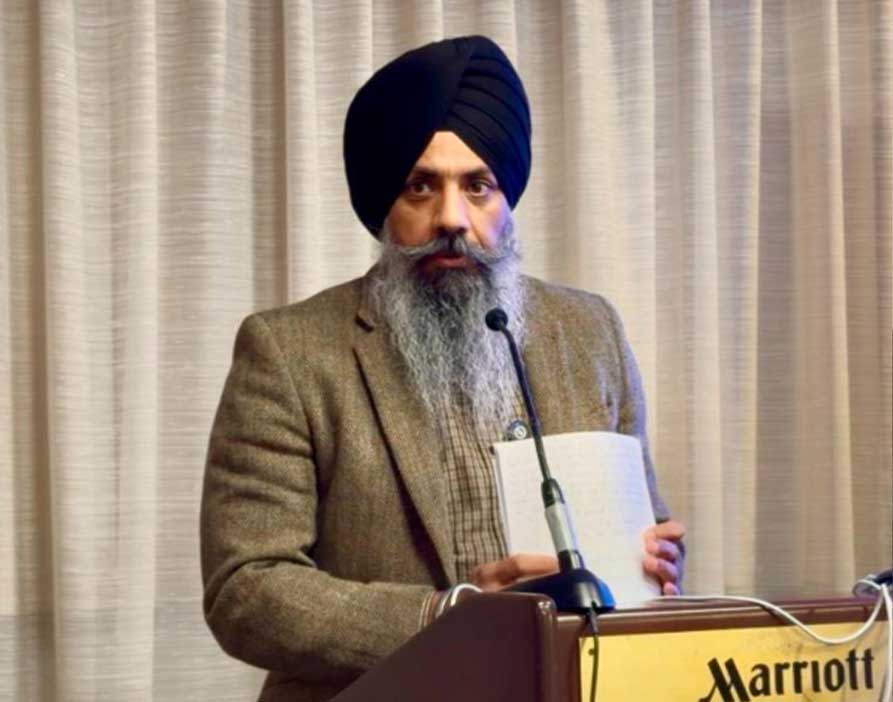
Martin Heidegger tells us that we become conscious about this immersion only when a gadget malfunctions. A car and a phone feel like extensions of us until they stop working. Similarly, air conditioning seems to be a ‘natural’ state of our living spaces till it breaks down. We are in technology like a fish is in water. It is everywhere to such an extent that we no longer notice it. At the same time, we are incapable of living without it.
Although technology is ubiquitous, reflection on its essence is quite rare. Martin Heidegger’s contemplation on the question of technology, although three quarters of a century old, are quite prescient. He warned against understanding technology in anthropological or instrumental terms. Anthropological definition of technology asserts that technology is a human doing. That it is something created by humans. On the surface, it appears to be obviously true. However, according to Heidegger, it does not capture the essence of technology. Similarly, the instrumental definition of technology implies that technology is a means to an end. Again, it sounds right. However, upon closer inspection and reflection, this too does not do justice to the task of finding out the essence of technology. Despite this enormous ubiquity, we seldom think about technology in any other way than in terms of efficiency and convenience.
Heidegger took this problem head on in his 1953 essay ‘The Question Concerning Technology: In this seminal essay, he provokes us to think otherwise about technology. He says that the essence of technology is in itself nothing technological. The essence of technology lies in its ability to bring forth everything merely as a resource. He named this dark power of technology Gestell, usually translated into English as enframing. The climate change we are witnessing today is a consequence of this enframing power of technology.
However, this enframing power of technology is not only about altering the material conditions of life. It also transforms our inner lives. In 2026, it is obvious that the primary battleground of technology is no longer the natural world. Now, the human mind has become the primary arena for the battle over our inner lives. Marketing technologies, the attention economy, and the all-pervasive surveillance mechanisms have completely transformed the social space where our psychic life takes place and gets shaped. From the ‘Torches of Freedom’ campaign by Edward Bernays1to our very own clickbait infused digital sphere, our attention is constantly under attack to influence our lives against our own interests. Surveillance, economic as well as political, unconsciously triggers or blocks certain decisions that are tied to our existential concerns. Under such circumstances, a collective form of genuine spirituality becomes very difficult.
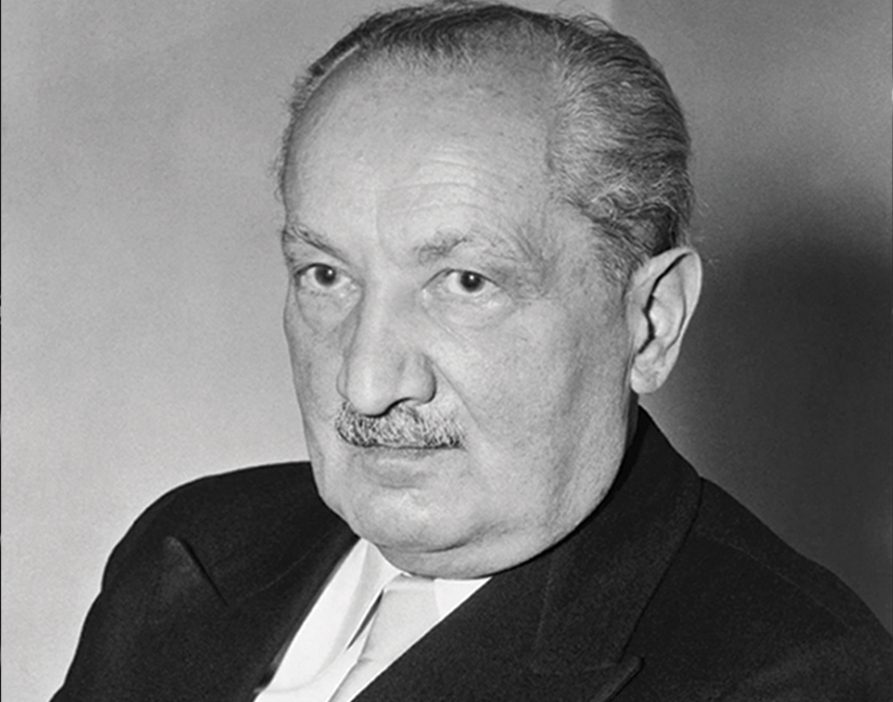
Attention is the new oil. During the 20th century, oil played an outsized role in shaping historical progress. Business behemoths like the Standard Oil Company, British Petroleum, and Shell acquired an outsized role in shaping the economic, political, and cultural aspects of our lives. In the 21st century, the power of oil has given way to the power of human attention. The commodification of attention is transforming the very core of our beings. It is redefining what it means to be human.
Today, the biggest business giants are those companies that harness human attention such as Google, Meta, and ByteDance. This shift from oil to attention signifies that technology has directed its attention from the outside world to our inner lives.

With the rise of artificial intelligence technologies like ChatGPT, we have entered a new epoch in human cultural evolution. So far, technology was limited largely to taking the weight of menial labour off from us. The new technologies, built on the large language models, are taking over the task of calculative thinking for us. This is a decisive shift which comes with new challenges. It opens new pathways towards human emancipation as well. Sikh spiritual practice has the potential to play a significant role at this watershed moment in human history.
These transformations have massive implications for a community like the Sikhs, for whom guarding, cultivating, and channeling their psychic energy is an integral part of their spiritual practice. However, we are mostly oblivious about it. Sikh spiritual practice is all about guarding attention from distractions and transforming it with a divine longing for Vismaad (ਵਿਸਮਾਦ).
1 ‘Torches of Freedom’ was a clever marketing campaign devised by Sigmund Freud’s nephew Edward Bernays aimed at convincing women to start smoking.
Vismaad is a quintessential Sikh concept that defines the nature of divine reality. Vismaad is also a state of dfbeing that runs counter to the enframing logic of modern technology. Sikh spiritual practice aims at opening a Vismaadi state of being that helps one build an alternative relationship with nature, work, and community. The most important thing to remember about Vismaad is that it is neither an emotion nor a product of the mechanisms of human psyche. Hence, it has completely escaped the modern modes of inquiry aimed at investigating the human psychic dimension. Vismaad is the experience produced by wonder and awe. It comes from the outside. It pours over the distressed soul as rains pours over parched soil. The experience of Vismaad is like a ‘desert bloom.’ When a heavy rain occurs in the desert, which is indeed a rare occurrence, it is quickly covered in thousands of flowers. This natural process also occurs, maybe more rarely, inside the human soul. When an anguish soul tastes Vismaad, the experience flows out in the form of Sewa (ਸੇਵਾ), Simran (ਸਿਮਰਨ), and Shahadat (ਸ਼ਹਾਦਤ). Sometimes, as part of the sewa, it also comes out as what is known today as art. However, in the early days of Sikhi, art was not separate from Kirat (ਕਿਰਤ). What we today consider as art was a work done with Suchajj (ਸੁਚੱਜ). Suchajji kirat (ਸੁਚੱਜੀ ਕਿਰਤ) is the definition of Sikh art.It could be transient or enduring. When a Sikh grandmother makes rotis, she is making art in the Sikh sense. The act of churning milk to form butter and lassi was the ultimate artistic act. Similarly, the ploughing of a field with a pair of bullocks was another form of transient art weaved in the daily rhythms of life. These unconventional artistic activities were brutally destroyed by the mechanization of these tasks and the sway of enframing logic of modern technology. These activities are, in essence, the overflowing of Vismaadi experiences. In the modern era, this overflow is also taking the form of conventional artworks such as painting, embroidery, and sculpture. It should be kept in mind that some Sikh women are creating unique artworks through their Vismaadi experiences.
Another Sikh concept that is really helpful in navigating the distractive atmospheres created by modern technological networks is Liv (ਲਿਵ). Liv is also a state of mind where the mind is fully absorbed in a bliss inducing spiritual activity. Liv empowers the body that becomes powerless in the face of distractions suffered by the mind. The concept of Liv which is not really a concept in the philosophical sense; but a lived practice aimed at the transformation of being challenges the mind-body duality. Mind and body, from the Sikh spiritual practice, are not separate. Liv is the jointure that makes mind and body embrace each other in a rhythmic manner. The quiet absorption of mind of body in the flows of Naam (ਨਾਮ) is what could never be enframed by technology. It will always stay outside the realm of that logic. It transforms both the mind and the body into the opposite of resources. It converts both into creators; creators of Vismaadi experiences.
When the lords of technology are hellbent on converting every inch of this living planet, which is called Dhartu Suhavi (ਧਰਤੀ ਸੁਹਾਵੀ) by our Guru Sahiban, into a resource and squeezing every microsecond of our attention, all we need is Liv and Vismaad. As our spirits move through history, a gigantomachia-a war of the gods and titans, is brewing in the heavens.
This war is between Gestell and Vismaad. Sikhs, the eternal warriors, will one day engage in this being-historical war and rewrite the history of the coming centuries!
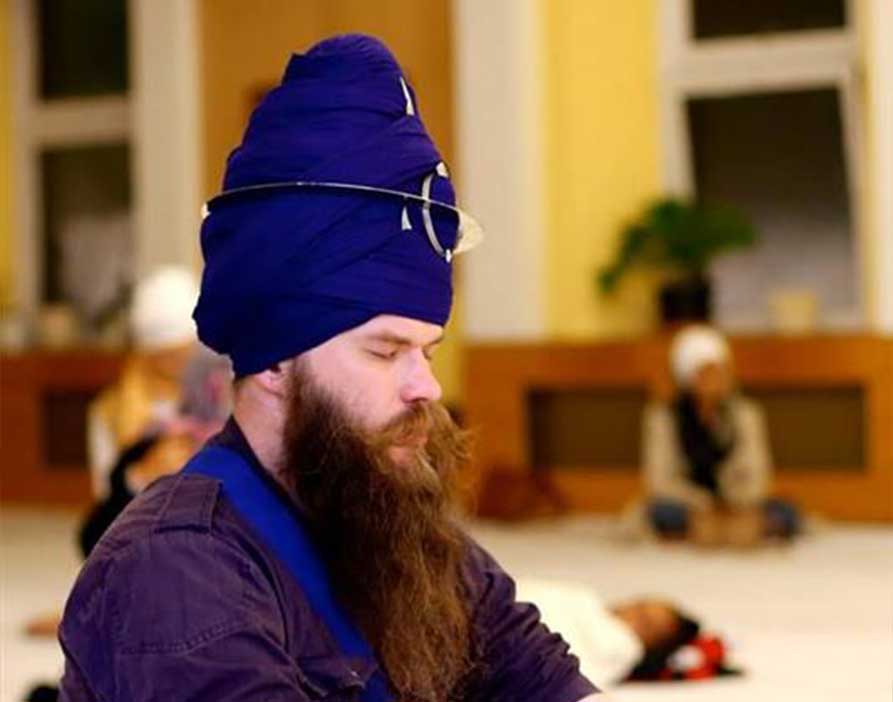
Dr. Prabhsharanbir Singh
Global Institute
info@giis.us
