
What is Bill 21?
In 2019, The Québec government passed Bill21 (Loi 21), “an act respecting the laicity of the State”. This law reinforces Québec’s state secularism through four principles: separation of state and religions, religious neutrality of the state, equality of all citizens, and freedom of conscience and When passed, the bill banned public employees – police officers, judges, Crown prosecutors, teachers, public servants, etc. – from wearing religious symbols like the hijab, dastaar, kirpaan, kippah, and large crucifixes.
Though framed as promoting equality and neutrality, many argue Bill21 violates fundamental rights to freedom of conscience religion, and expression. Critics say it’s their human right to wear religious symbols during work hours. Religious minorities who visibly practice their faith feel specifically targeted.
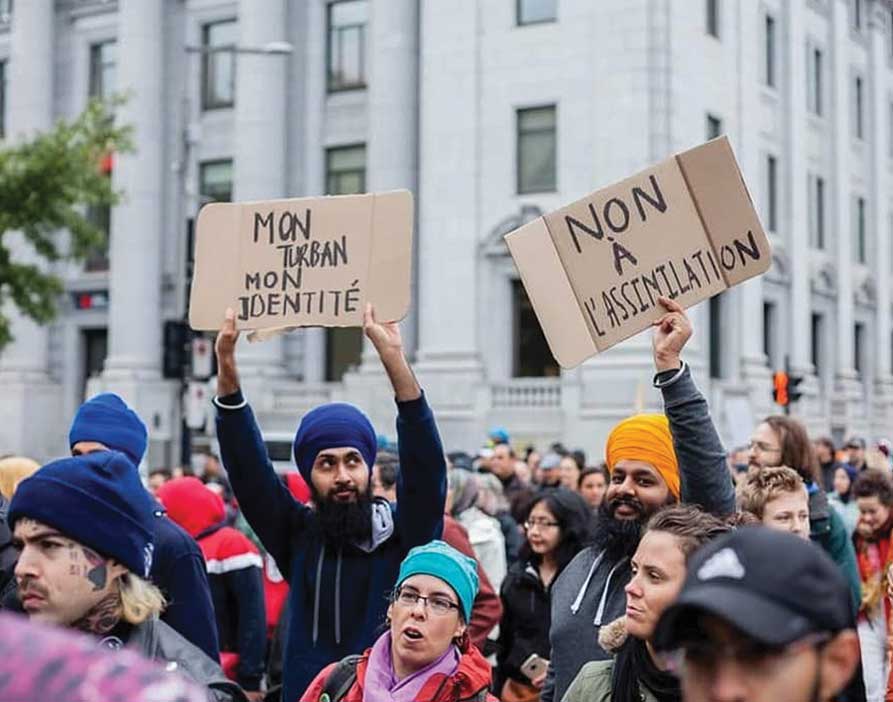
When controversy erupted, Premier of Québec François Legault said workers in authority are only asked to remove symbols during working hours, highlighting that the individuals can continue wearing them at home or on the street. Religious communities counterthat these aren’t “random objects” but core parts of their identity – impossible to remove without betraying faith.
Who is affected?
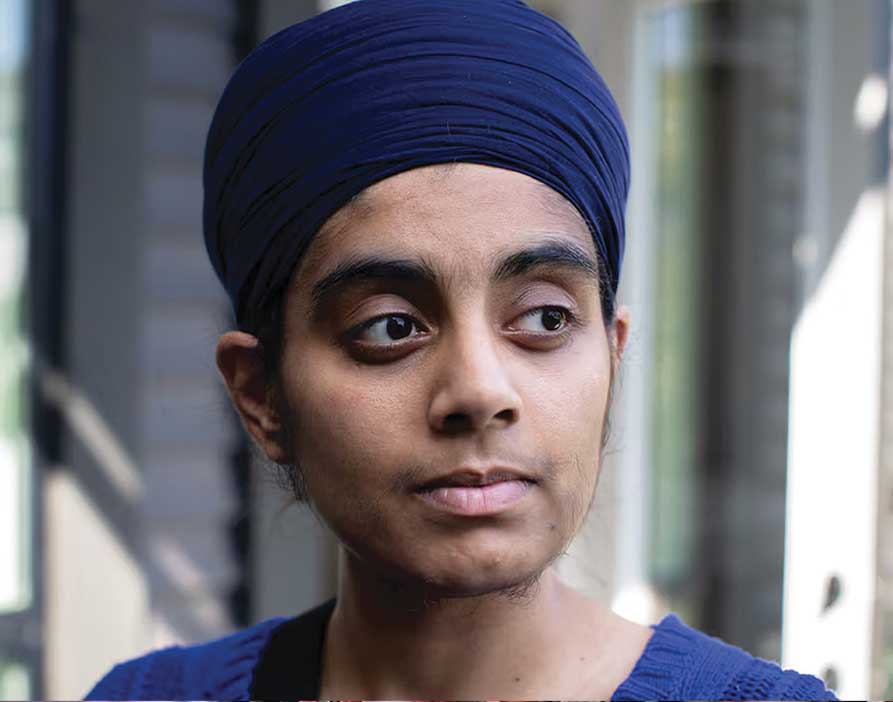
Religious minorities bear Bill 21’s heaviest burden, with Muslims, Sikhs, and Jews most affected. Public-sector workers refusing to remove religious symbols face a stark choice: quit or comply. Sikh teacher Amrit Kaur embodies this dilemma.
Former Québec vice president of the World Sikh Organization of Canada, Amrit Kaur was raised in Montréal and graduated as a teacher on June 16, 2019, the very same day Bill 21 passed. As an Amritdhaari Sikh, she wears a dastaar, kirpan, and karaa as mandated articles of faith. “People who look like myself, we are being told that we’re second class citizens,” Kaur told CBC.
She warns the law hits marginalized communities hardest Unable to teach while wearing her dastaar, Kaur left Quebec for British Columbia, where she now teaches freely. Kaur and others are challenging Bill 21 at the Supreme Court of Canada.
Her lawyer, Faiz Lalani, argued in court: “They are part of her, representing her fundamental values: gender equality, the duty to fight injustice and the importance of being aware of one’s actions.”
Québec’s Secularist laws since 2025
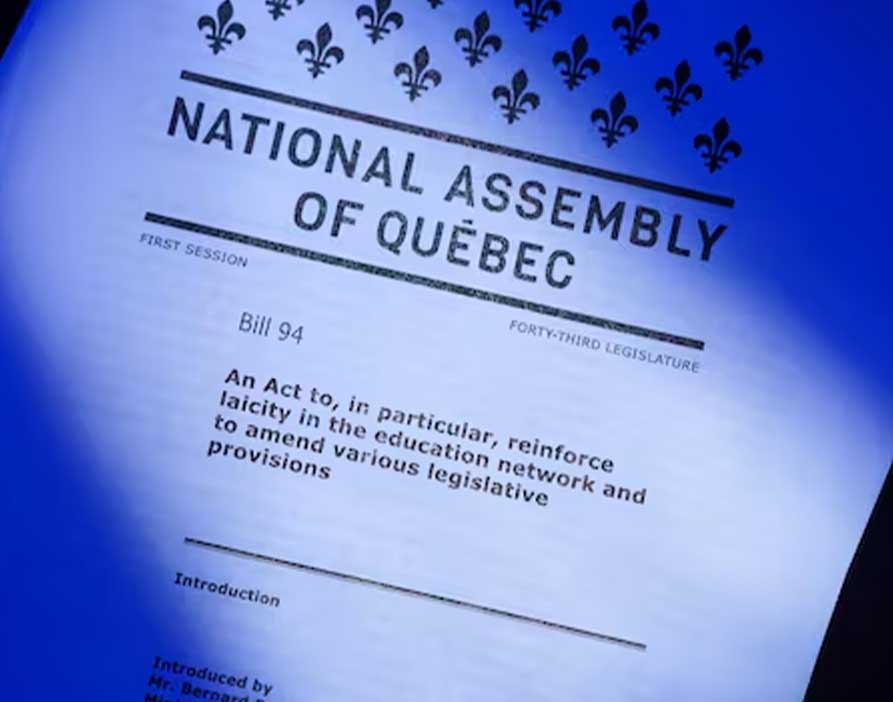
In 2025, Québec expanded its secularist laws with Bill 94, applying Bill 21’s four principles to education. The law bans face coverings for students in schools and religious symbols for all personnel, teachers, and volunteers on school grounds. There also exists a grandfather clause exempting existing staff hired before March 2025. Homeschooled children receiving school services must also uncover faces, as must their parents.
The National Assembly claims Bill 94 teaches students gender equality and anti-bullying (racism, homophobia, gender identity, disability, physical appearance). This new secularist billfocused on the educational network brings concerns for many parents and people involved in schools. Through a survey launched by the World Sikh Organization, Pavandeep Magon shared that he was personally affected by Bill 94. “I am not allowed to volunteer in my kids’ school due to my turban” says Magon. He further explains how his children are confused on why he can’t volunteer, since Seva is a fundamental teaching in Sikhi.
Sabaah Khan, a hijab-wearing Muslim mother who volunteered for four years, was banned in early 2026. “Insisting on the removal of religious attire, it violates my rights, my right to practise my faith, which is considered an essential part of my identity,” she told CBC.
Legal Core
The Bill 21 legal battle reached a defining moment on January 23, 2025, when Canada’s Supreme Court granted leave to appeal the Quebec Court of Appeal’s decision. Four intense days of hearings began March 23, 2026, bringing together lawyers for the English Montreal School Board, Sikh community, Muslim community, and civil liberties groups against the Quebec government.
At the heart of it, this is a clash between basic Charter rights and the government’s power to override them. Section 2(a) guarantees freedom of conscience and religion, which the Supreme Court has interpreted to protect not just private belief but the public manifestation of faith – including the wearing of our dastaars and kirpaans. Section 15 promises equality before and under the law, explicitly prohibiting discrimination based on religion, race, or sex.
For the Sikh community, laws that bar us from publicsector jobs – unless we remove our articles of faith – represent a direct violation of both religious freedom and substantive equality. Sections 27 and 28 were meant to safeguard these rights. Section 27 mandates that the Charter be interpreted to “preserve and enhance the multicultural heritage of Canadians,” a direct affirmation of Sikh identity within Canada’s diverse fabric. Section 28 ensures these rights apply equally to male and female persons, reflecting Sikh teachings of gender equality established by Guru Nanak Dev Ji.
Enter section 33, the “notwithstanding clause,” a deliberate legislative heated 1982 constitutional talks. What does it actually do? A provincial government can add one simple sentence to any law: “This operates despite sections 2 or 7-15 of the Charter for five years.” Courts cannot invalidate it, no matter how severely it violates religious freedom, equality rights, or any other rights in those sections.
This then raises the question: why does section 33 even exist? Before 1982, provinces like Quebec warned the Charter would create judge-made law – unelected judges wielding veto power over policies touching rights. Section 33 was their compromise: judges get review power, but elected legislatures retain final authority.
The clause expires after five years unless renewed, deliberately matching Canada’s maximum parliamentary term. This forces voters to judge politicians who override fundamental rights.
The intended process is clear: a court strikes down a law, the legislature disagrees, invokes section 33, and voters decide at the next election.
Quebec subverted this entirely. Bill 21 was written with section 33 pre-emptively from day one (June 2019), blocking courts before any ruling. Quebec renewed it quietly February 2024, with no election forcing the issue until October 2026.
The impact on the Sikh community is devastating. What was meant as a temporary democratic reset turned into a permanent pass for religious discrimination.
Call to Action
From Bill 21 to Bill 94, Quebec’s secularism laws have upended lives and violated the rights of visible religious minorities. Sikh professionals are forced to make an impossible decision between their identity and their livelihood. Amrit Kaur left her Québec home for British Columbia to teach while wearing her dastaar. Not everyone has that option.
Many quit public-sector jobs, relying on family support. But this doesn’t only affect adults. Children in schools are now deprived of multicultural role models.
In 2022, the “Éthique et culture religieuse” (Ethics and Religious Culture) elementary and high school program was replaced by “Culture et citoyenneté québécoise” (Culture and Citizenship in Québec). This shift downplays religion, denying kids exposure to diverse cultures, faiths, and community beauty. Bill 94 doubles down: banning visible religious teachers compounds the loss.
“It is our students, who are robbed of a multicultural environment and left with the idea that expressing a religious practice is a criminal or even a deviant act.” Amrit Kaur warns. Quebec’s inclusive past is gone.
Religious exclusion also divides children. Faith-committed students face barriers unknown to secular peers, breeding hostility amid already rising school discrimination and racism.
Bill 94’s logic threatens more. Quebec could soon ban student religious symbols under “neutrality.,” claiming children face “religious pressure’, even when voluntarily practicing faith on school grounds.
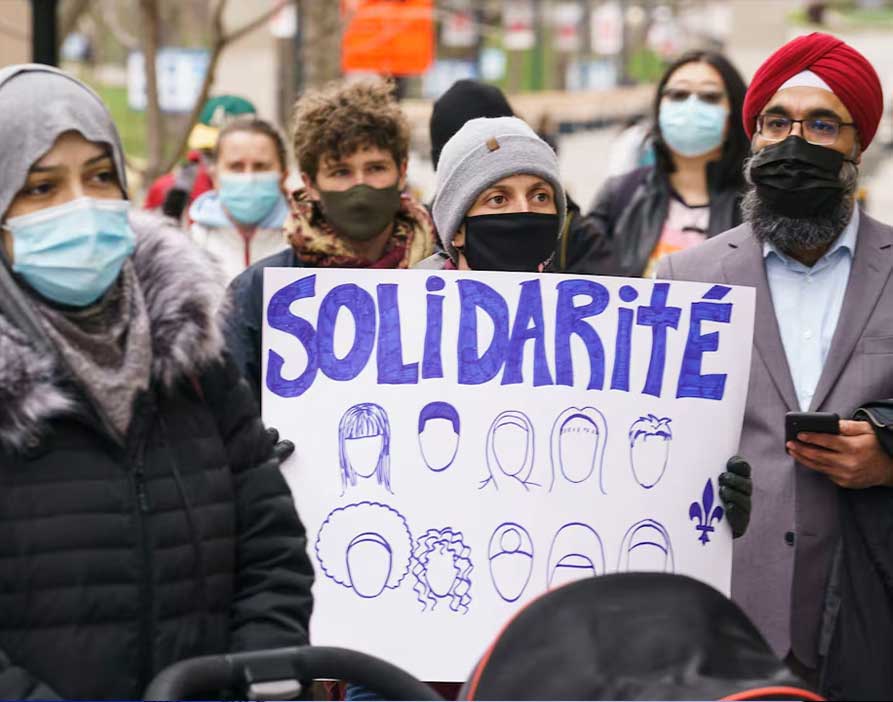
What can we do then? Most Quebecers know little SOLIDARITE of Sikhi beyond stereotypes. The best defence is awareness. Teach your neighbors our Gurus timeless teachings of equality of all humanity, gender parity, and seva as community service. This land is our children’s future. We must ensure they never face the brutal battles our community fought to practice fundamental rights.
By Angad Singh & Simran Kaur Ramgarhia
World Sikh Organization
