
From Survival to Service:
Swarnjit Singh and the Making of New England’s First Sikh Mayor
History often remembers moments, but it is people who carry their weight forward. For Swarnjit Singh, the journey to becoming the first Sikh mayor in New England did not begin with politics, elections, or public office-it began with survival.
As an infant, Singh and his family fled New Delhi during the 1984 Sikh genocide, a dark chapter in modern history when thousands of Sikhs were murdered in targeted violence. Forced displacement, fear, and uncertainty became part of his earliest inheritance. Though too young to remember the events themselves, the echoes of that trauma shaped his understanding of identity, justice, and the cost of being “different.” That early history did not harden him-it grounded him.
An Immigrant’s Promise
At the age of 20, carrying little more than hope and determination, Swarnjit Singh immigrated to the United States to pursue education in New Jersey. Like many newcomers, he arrived in a country fullof opportunity but demanding resilience. Singh worked, studied, adapted, and slowly built a life rooted in contribution rather than comfort.
Eventually settling in Norwich, Connecticut, Singh found more than a home-he found responsibility. He became a real estate developer, opened his own Shell gas station, and immersed himself in the life of the city. His belief was simple but powerful: real belonging comes not from arrival, but from participation.
That belief led him into public service.
Before becoming mayor, Singh served on the Norwich City Council, the Board of Education, and numerous local boards. These roles were not stepping stones-they were classrooms. They taught him how cities function, where systems fail, and how leadership must listen before it acts.
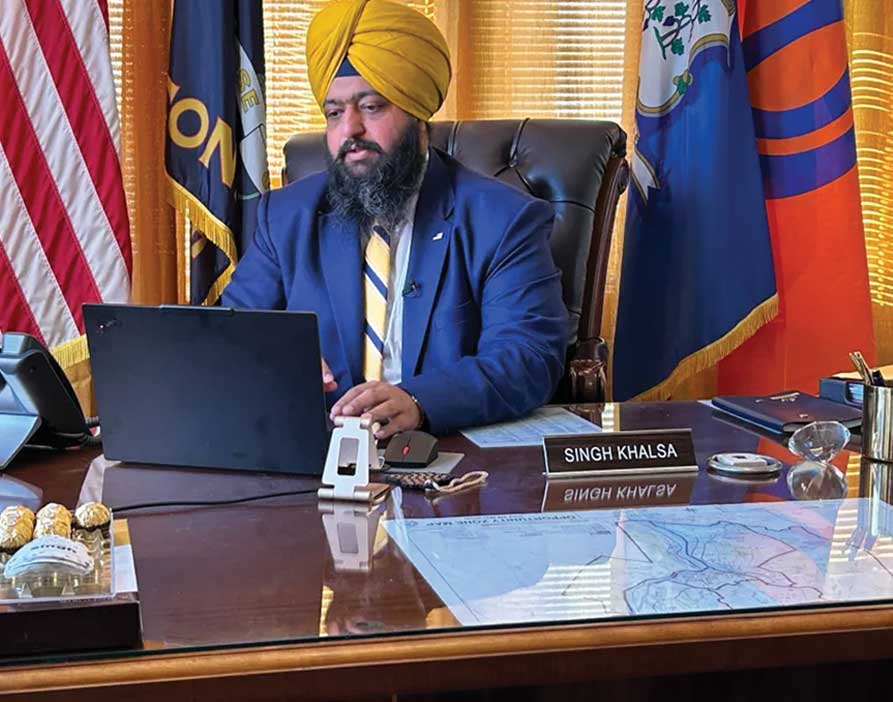
A Historic Moment for New England
On December 2, at just 40 years old, Swarnjit Singh was sworn in as mayor of Norwich, becoming the first Sikh mayor in the history of New England. The moment was historic, but Singh was careful not to frame it as personal triumph.
“This isn’t about me,” he said. “It’s about what’s possible when a city believes in fairness, inclusion, and shared progress.”
His election sent a quiet but powerful message: leadership is measured not by religion or ethnicity, but by trust.
In an election marked by clear public support, Singh secured 3,978 votes-over 1,100 more than his nearest competitor. Voters chose experience, empathy, and vision over fear or division.
State Senator Saud Anwar, himself a pioneer as Connecticut’s first Muslim mayor in 2013, described Singh’s victory as a reflection of the people’s values.
“People vote for leadership,” Anwar said. “They vote for someone who can solve problems, respect differences, and plan for the future. Mayor Singh embodies those qualities.”
A City for Everyone
Singh’s leadership philosophy is deeply inclusive. One of his earliest initiatives was expanding accessibility-ensuring Norwich’s city website could be translated into over 100 languages. His administration is also working to recognize more than 50 cultural observances on the city calendar, an effort to reflect the lived realities of its residents.
For Singh, diversity is not symbolic-it is practical.
“When people feel seen, they participate,” he said. “And when they participate, cities grow stronger”
In a national climate where immigrants are frequently targeted, Singh’s message is steady and unambiguous.
“America belongs to all of us,” he said. “This is a home for everyone. When I talk about faith, I don’t mean just religion-I mean belief in one another. Every faith teaches us how to be better human beings. We cannot afford to lose hope
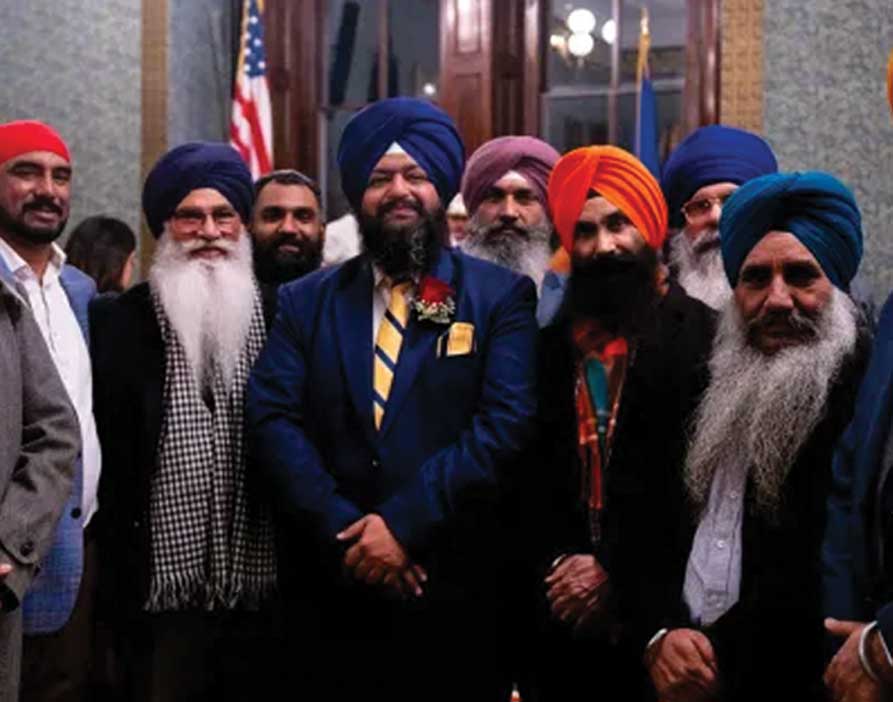
Reviving Norwich: Work, Housing, and Dignity
At the heart of Mayor Singh’s agenda lies a pressing economic mission: to restore Norwich as a city of opportunity.
Years of industrial decline have left gaps-empty buildings, lost jobs, and rising housing costs. Singh believes these challenges are interconnected, and so must be the solutions.
“We need to bring back manufacturing, jobs, and workforce housing together,” he said. “You can’t fix one without addressing the others.”
Singh envisions transforming existing infrastructure into mixed-use developments-retail spaces at street level with affordable housing above. He is also determined to move long-stalled projects like the Occum Industrial Center toward completion, attracting manufacturing, biotech, food processing, and logistics companies.
Governor Ned Lamont has expressed support for this vision, acknowledging that Connecticut’s housing shortage is among the most severe in the country. He emphasized collaboration with municipal leadership as essential to addressing affordability, homelessness, and economic stagnation.
“Without housing, there is no sustainable future,” Singh said. “Not for families, not for workers, and not for businesses.”
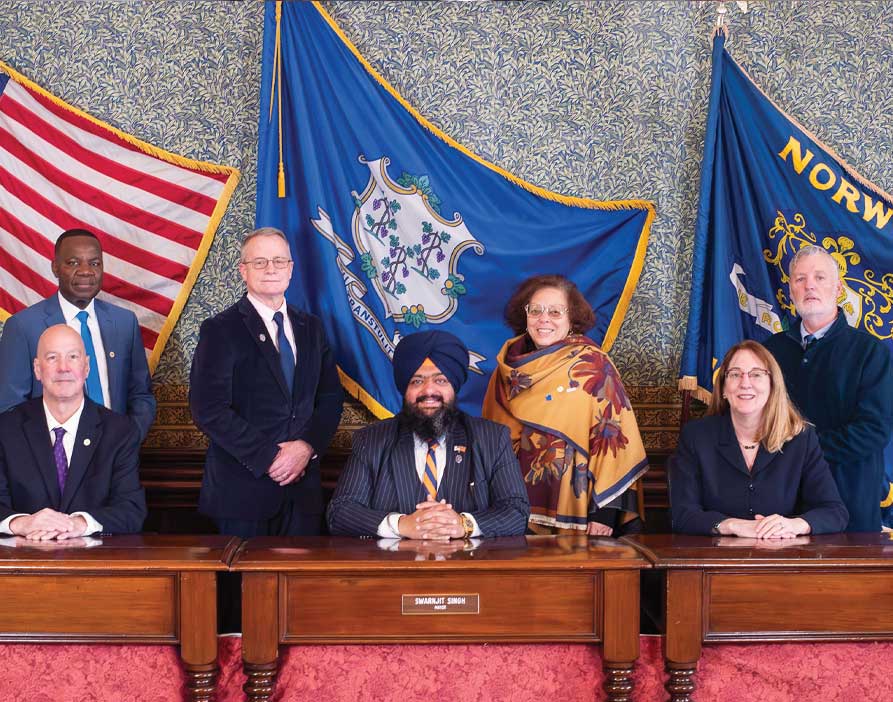
Faith in Action
Founded over 500 years ago in Punjab, Sikhism emphasizes meditation, honest labor, equality, and service. These values are not abstract for Singh-they guide his daily life.
The dastar (turban) he wears is a visible reminder of responsibility and accountability.
“It represents commitment-to justice, to community, and to service,” he explained.
Public service, for Singh, is an extension of Sikh principles: to work honestly, share knowledge, and uplift others.
Community leaders have noticed. Gurpreet Singh, owner of the Royal Punjabi Restaurant in Norwich, described the mayor as a defender of rights across all communities. Messages of congratulations have poured in from Sikh communities across North America and beyond-some as far away as the Philippines.
Manmohan Singh Bharara, director of the Sikh Art Gallery and Guru Nanak Food Pantry in Norwich, sees Singh’s leadership as transformative.
“Sikhs have often been misunderstood or mistaken for others,” he said. “Our faith teaches discipline, service, and care for humanity. Representation like this helps break barriers.”
Leading Without Illusions
Singh does not deny the presence of racism or division in society.
“If we don’t acknowledge the problem, we can’t solve it,” he said. “But we cannot let it define us.”
Instead, he hopes to create spaces for dialogue-cultural conversations, community forums, and shared learning-to replace fear with understanding.
His vision for Norwich is ambitious: a revitalized downtown, thriving small businesses, walkable streets, coffee shops, cultural spaces, and jobs that allow families to build stable lives.
But beneath the plans and policies lies something deeper-a belief that leadership must heal as much as it governs.
A Future Rooted in Belonging
Swarnjit Singh’s journey-from a child displaced by violence to a mayor elected by trust-captures the essence ofa promise many believe is fading but still alive.
His story is not only Sikh history, immigrant history, or political history-it is a reminder that cities move forward when leadership reflects the people it serves.
In Norwich, that future has begun-not with slogans, but with service.
By: Mannthology Editorial Team
