
The Sikh Genocide
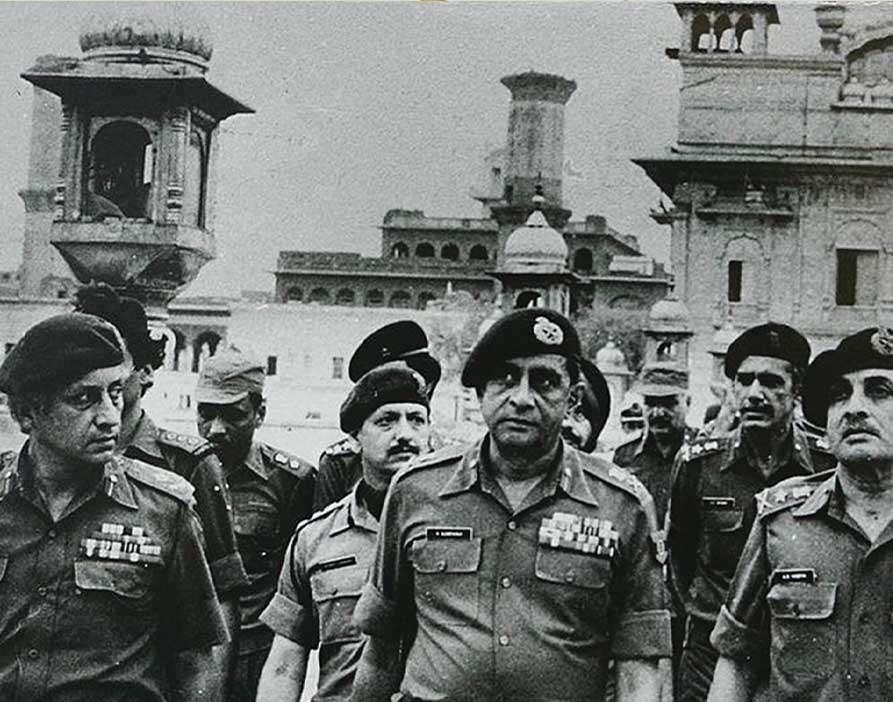
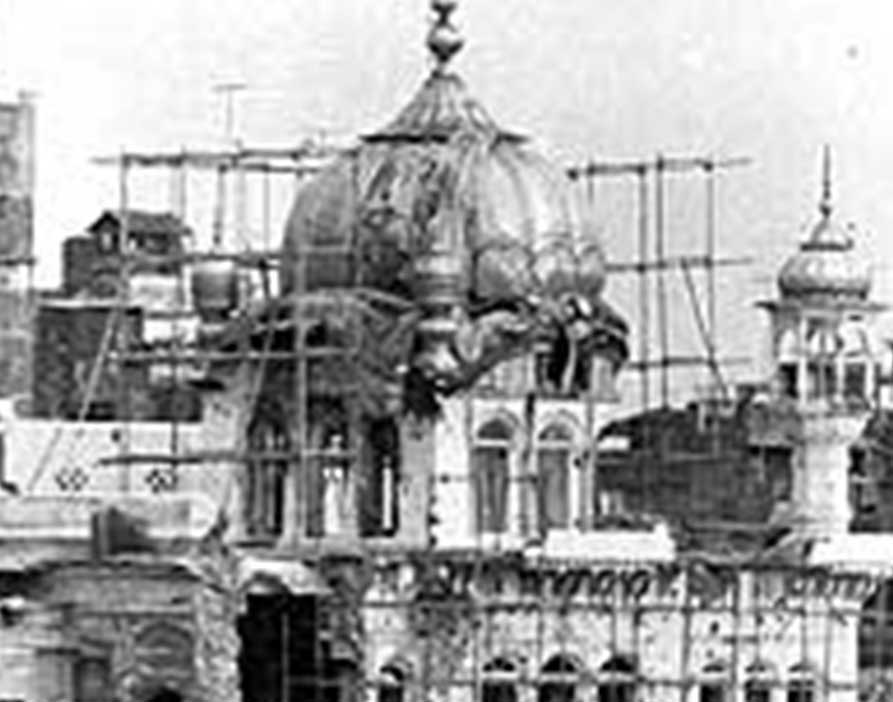
In June 1984, the Indian Army invaded the Harmandir Sahib (Golden Temple) complex in Amritsar, Punjab, India. Harmandir Sahib is the holiest of Sikh shrines, and within the complex is also the Akal Takhat, the highest seat of temporal power of the Sikhs.
Since June 4th is a religious holiday, the complex was filled with thousands of pilgrims. Forty (40) other Sikh shrines in Punjab were also attacked.
The Harmandir Sahib and Akal Takhat were desecrated by this army attack.
English author Mark Tully estimates that over 2,000 innocent Sikh men, women and children were killed in the Golden Temple complex alone1.
Sikhs around the world considered this an attack on the Sikh psyche and identity.

Joyce Pettigrew
professor at Queen’s University in Belfast, states, “The army went into the Golden Temple not to eliminate a political figure or a political movement but to suppress the culture of a people, to attack their hearts, to strike a blow at their spirit and self-confidence.2
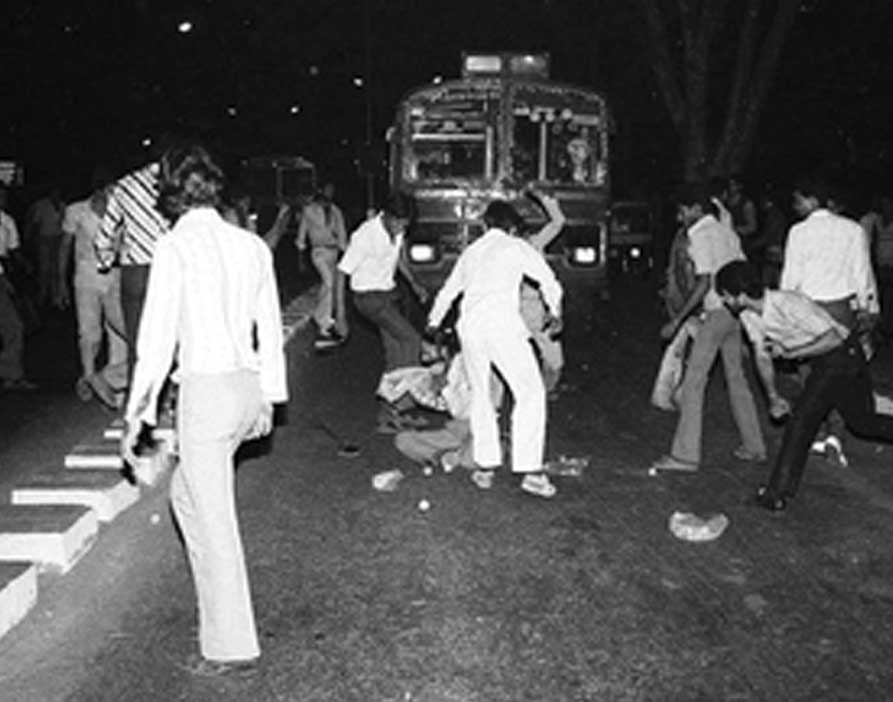
In retaliation to this army assault, Prime Minister Indira Gandhi was assassinated by her two Sikh bodyguards on October 31, 1984. When news spread across India that two Sikhs had killed her, the beginnings of a genocide were triggered.
An organized and systemic campaign of violence against innocent Sikhs was perpetrated by leading government officials, who wanted revenge for the Prime Minister’s assassination. Sikh homes were marked, and businesses were looted, Sikh men and boys were killed in the streets by organized mobs, and women and girls were raped. The police were indifferent to the violence and even spent the first day of the genocide disarming Sikhs from defending themselves. The organizers and perpetrators wanted to killas many Sikhs as possible. Sikhs were killed for no other reason than they were simply Sikhs.3
1 Parvinder Singh, “1984 Sikhs’ Kristallnacht” online: (2009) Ensaaf at 4 <www.ensaaf.org
2 Joyce Pettigrew, The Sikhs of Punjab: Unheard Voices of State and Guerrilla Violence, (London: Zed Books, 1995) at 8.
3 Supra note 1 at 8.
Khushwant Singh, a former member of the Indian Parliament who witnessed and survived the genocide stated: I realized what Jews must have felt like in Nazi Germany. The killing assumed the proportion of a genocide of the Sikh community. For the first time I understood what words like pogrom, holocaust and genocide really meant. Sikh houses and shops were marked for destruction in much the same way as those of Jews in Tsarist Russia or Nazi Germany.4
Estimates of the number of Sikhs killed range from 3,000 to 30,000, and 50,000 Sikhs were displaced during this three-day genocide.5
In keeping with the belief that there is no reconciliation without meaningful justice, it is our belief that meaningful justice that addresses the needs of the victims and the community in the case of the Sikh genocide would at minimum entail international recognition of Sikh genocide.
We include a Model Resolution: which we seek all Gurdwaras and concerned organizations across Canada to adopt: which calls upon the Parliament of Canada and allCanadian Members of Parliament to pass a motion officially recogntzing the state-sponsored violence against Sikhs in India in 1984 as genocide in accordance with UN General Assembly Resolution 260.
We further seek that once adopted by the congregation and/or members, the resolution be forwarded to all Gurdwaras across Canada for adoption and to all Members of Parliament.
Ultimately, we all commit to engaging with elected officials, human rights organizations, and other communities to ensure that truth, justice, and historical memory are upheld and that Canada leads in the global affirmation of human rights and condemnation of genocidal violence.
Finally, we also include a Model Motion for consideration and adoption by Parliament of Canada and all Canadian Members of Parliament.
Ad Hoc Committee for the Recognition of the 1984 Sikh Genocide A Coalition of Canadians Seeking Truth & Justice
office@thesikhgenocide.ca
We look forward to meaningfully and proactively engaging with our Canadian elected representatives so that recognition of the 1984 Sikh Genocide can be achieved in Canada as it has been achieved in numerous jurisdictions across the world, including India.

4 Khushwant Singh, My Bleeding Punjab, (Columbia: South Asia Books, 1992) at 93.
5 Harnik Deol, Religion and Nationalism in India: The case of the Punjab, (New York: Routledge, 2003) at 109.
The Author’s Argument for Classification as a Genocide
Sanjam Panag’s thesis argues that the 1984 anti-Sikh violence in India meets the conceptual and legal criteria of genocide. Using Raphael Lemkin’s conception of genocide, Johan Galtung’s typology of violence, the UN Convention on the Prevention and Punishment of the Crime of Genocide (1948), and Gregory Stanton’s model of the eight stages of genocide, Panag contends that the attacks were not spontaneous riots but an orchestrated campaign of annihilation-culturally, structurally, and physically-against the Sikh community.

The thesis frames the massacres as a state-enabled and ideologically driven act aimed at destroying Sikh identity. Through the desecration of religious sites, targeted killings, and political impunity, the violence exhibited the hallmarks of a genocidal process rather than isolated communal violence.
Lemkin’s Definition of Genocide
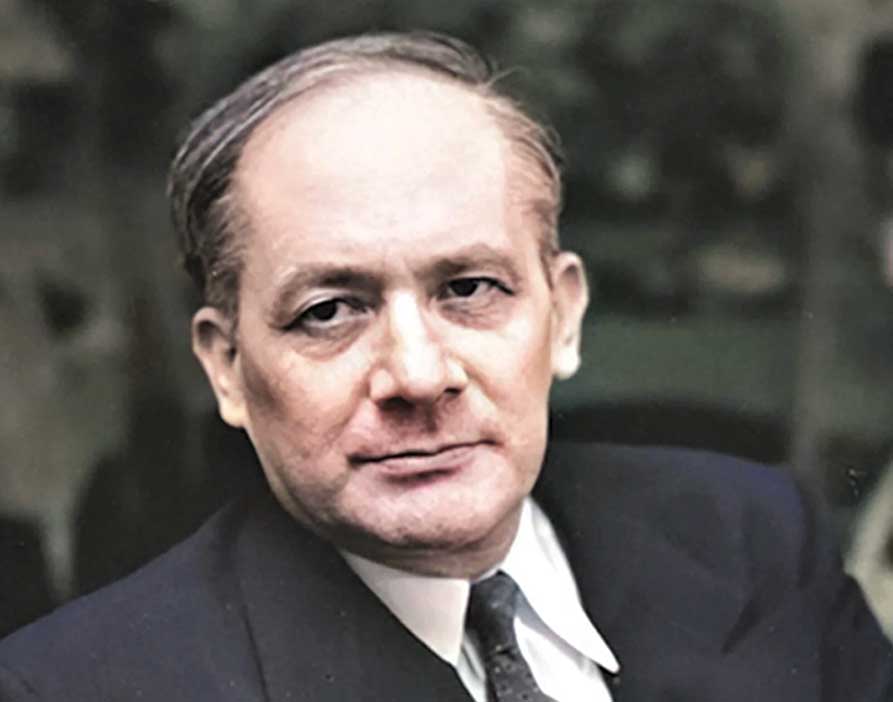
Panag grounds the classification of 1984 as genocide in Raphael Lemkin’s original conception, which goes beyond mass killing to encompass the systematic destruction of a group’s cultural, social, and moral fabric. Lemkin defined genocide as a “coordinated plan aimed at the destruction of the essential foundations of the life of national groups” (Wilt, 2012, p. 6). He viewed genocide as a process that occurs in two phases:
1 The destruction of the national pattern of the oppressed group, and
2 The imposition of the national pattern of the oppressor (Shah, 2002, р. 354).
In this context, Panag argues that India’s actions toward Sikhs in 1984 followed this dual process: the deliberate dismantling of Sikh cultural and religious life, and the imposition of a Hindu nationalist identity as the dominant national framework.
Lemkin emphasized that genocide encompasses multiple dimensions-political, social, cultural, economic, biological, religious, and moral (Kuper, 1981)—making it a total assault on a people’s existence. Panag applies this framework to demonstrate that the destruction of Sikh cultural symbols, particularly during Operation Bluestar (1984), constituted genocide by targeting the community’s collective identity and spiritual foundations. The attack on the Golden Temple and the Akal Takht, as well as the burning of the Sikh Reference Library, were not mere collateral damage but acts of cultural annihilation. Lemkin wrote that “the destruction of cultural symbols is genocide,” and Panag echoes this, asserting that India’s military and political actions in 1984 intentionally sought to erase Sikh ways of knowing, worship, and being.
Galtung’s Typology of Violence and Genocide
Building on Lemkin, Panag integrates Johan Galtung’s typology of violence-direct, structural, and cultural-to analyze how genocide operates as a complex socio-political process rather than a single event.
• Direct violence refers to physical harm and killing.
• Structural violence manifests through systemic oppression and institutional discrimination.
• Cultural violence includes ideologies and narratives that justify and normalize harm against a group.
Panag, drawing on Hobson (2019), shows that genocidal processes utilize all three forms simultaneously. In 1984, cultural violence took shape through the “ethnic-terrorist narrative” that dehumanized Sikhs as militant threats to India. This narrative legitimized state violence and public hatred. Structural violence emerged through the complicity of police, politicians, and the legal system-institutions that actively enabled or ignored the violence. Finally, direct violence occurred in the widespread massacres, rapes, and arson carried out against Sikhs across Delhi and Punjab.
Thus, Panag characterizes the 1984 genocide as an interlocking system of cultural, structural, and physical destruction that aligns directly with Galtung’s typology and Lemkin’s holistic understanding of genocide.
The UN Genocide Convention
Panag further grounds the classification of 1984 as genocide within the 1948 UN Genocide Convention, ratified by India in 1959. Article Il of the Convention outlines five acts that constitute genocide when committed with intent to destroy a group, in whole or in part:
(1) Killing members of the group.
(2) Causing serious bodily or mental harm.
(3) Deliberately inflicting life conditions intended to bring about physical destruction.
(4) Imposing measures to prevent births.
(5) Forcibly transferring children.
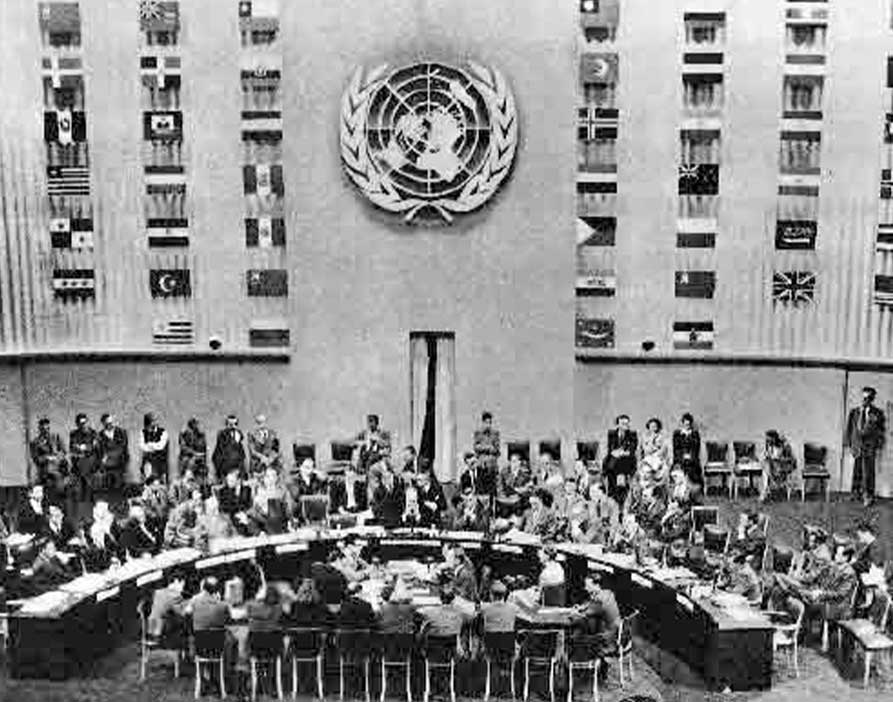
Panag demonstrates that at least the first three acts were clearly present in 1984: mass killings of Sikhs, widespread mental and bodily harm through rape, torture, and humiliation, and conditions of terror and persecution that destroyed livelihoods and communities.
To establish intent, Panag draws on precedent from the International Criminal Tribunal for Rwanda (ICTR), particularly the cases Prosecutor v. Akayesu and Kayishema and Ruzindana. These cases clarify that the intent to destroy a group “in whole or in part” is sufficient; complete extermination is not required. Panag shows that such intent can be inferred when a specific group is systematically targeted while others are spared.
Evidence from 1984-such as pre-prepared voter lists identifying Sikh households, distribution of kerosene and weapons, and explicit anti-Sikh slogans broadcast publicly-demonstrates a deliberate, organized effort to destroy Sikh lives and property. This satisfies the mens rea (mental intent) component of genocide under international law.
The thesis also notes that the state’s failure to prosecute perpetrators and its active role in manipulating police records reinforce the argument that the violence was not spontaneous mob action but an organized campaign with official sanction. According to Panag, such deliberate inaction represents a form of structural complicity that perpetuates the genocidal process beyond the immediate killings.
Evidence of Genocidal Intent
Drawing from legal and eyewitness evidence, Panag establishes that genocidal intent in 1984 was explicit and organized. Politicians incited mobs with slogans like “Khoon ka badla khoon se lenge” (“We willtake blood for blood”), and local leaders distributed voter lists to help attackers identify Sikh homes. Eyewitnesses and reports reveal that police stood by or directly participated in the killings, and official investigations were suppressed through destroyed records and falsified reports (Suri, 2015; Kaur, 2006).
Following the International Criminal Tribunal for Rwanda’s interpretation, Panag argues that such actions demonstrate a premeditated intent to annihilate Sikhs as a collective group.
The destruction of Sikh markers of faith-cutting of hair, desecration of gurdwaras, and the attack on religious symbols-was intended not only to kill individuals but to eradicate Sikh identity itself, fulfilling both the physical and cultural components of genocide.
The thesis concludes that even if the exact number of victims remains contested, numerical precision is irrelevant under international law; what matters is the specific intent to destroy, which was evident throughout the organization and execution of the 1984 attacks.
Stanton’s Eight Stages of the Sikh Genocide
To further illustrate that 1984 followed a recognizable genocidal process, Panag applies Gregory Stanton’s (1996) “Eight Stages of Genocide model to the anti-Sikh violence:
Classification: Social divisions between Hindus and Sikhs were sharpened by political rhetoric that framed Sikhs as “outsiders” and threats to national unity.
Symbolization: Sikh identity visibly marked by the turban and the kara became a target of suspicion. Religious symbols were transformed into stigmas.
Discrimination: State institutions and media amplified stereotypes of Sikhs as “Khalistani terrorists.” The arrest and vilification of Sant Jarnail Singh Bhindranwale typified this stage.
Dehumanization: Sikhs were labeled “terrorists” and “traitors,” echoing the propaganda techniques seen in other genocides such as Rwanda.
Organization: The government and political operatives orchestrated the killings through systematic planning lists, supplies, and coordination with police forces
Polarization: Propaganda, especially surrounding Operation Blue star, intensified public hatred and justified repression.
Preparation: Victims were identified and separated through detailed records and public targeting.
Persecution and Extermination: The massacres of November 1984, where mobs murdered thousands of Sikhs, burned gurdwaras, and raped women, marked the culmination of the genocidal process.
Panag argues that these stages are not linear but cyclical-each stage reinforces the next. The continued denial of genocide, she writes, constitutes an ongoing form of structural and cultural violence that prevents healing and reconciliation.
Denial and the Politics of Naming
The thesis concludes that denial is the final and most enduring stage of genocide. Despite overwhelming evidence, the Indian government continues to label the violence as “riots” or “communal clashes.” Panag cites Mahmood Mamdani’s (2007) concept of the politics of naming, which explains how states avoid acknowledging genocide to preserve legitimacy and international standing.

Denial not only obscures truth but perpetuates injustice. Without recognition, survivors remain trapped in cycles of trauma, and structural inequalities persist. For Panag, acknowledging 1984 as genocide is not only a matter of historical accuracy but a precondition for peacebuilding and intergenerational healing. Following Galtung (1964), she connects recognition to the creation of “positive peacea state in which structural, cultural, and direct violence are eliminated and society integrates all groups equitably.
Conclusion
Panag’s analysis demonstrates that the anti-Sikh violence of 1984 fulfills both the conceptual and legal definitions of genocide. Drawing on Lemkin’s understanding of cultural destruction, Galtung’s multidimensional theory of violence, the UN Genocide Convention’s legal standards, and Stanton’s stages of genocide, she shows that the events were:
• Systematic and planned, not spontaneous.
• Culturally targeted, seeking to erase Sikh identity.
• Institutionally enabled, through police and political complicity; and
• Continuously denied, which extends the violence into the present.
By framing 1984 through these lenses, Panag concludes that the Indian state’s failure to recognize and prosecute the genocide represents not closure but continuation. Recognition, accountability, and reconciliation are therefore essential to restoring peace and justice for the Sikh community.
By Manohar Singh Bal
Secretary & Director of Religious Affairs
Gurdwara Guru Nanak Mission Centre
office@ggnmc.ca
